An AI system built by Seattle’s Allen Institute for AI (Ai2) has found evidence that a common form of breast cancer, long thought to be a poor candidate for immunotherapy, might actually respond to it.
The finding, produced by Ai2’s AutoDiscovery system, has led to an expanded partnership with the Paul G. Allen Research Center at Providence Swedish Cancer Institute, which is now deploying the AI system on its own patient data to look for similar scenarios across other types of disease.
The announcement Thursday illustrates the broader potential for AI to uncover findings that human researchers, overwhelmed by the massive scale of modern datasets, might otherwise miss.
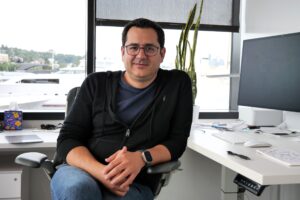
“Cancer researchers have access to extraordinary datasets, but the challenge is no longer collecting data; it’s understanding everything those datasets have to tell us,” said Dr. Kelly Paulson, who leads the Center for Immuno-Oncology at the Paul G. Allen Research Center, in a statement.
AutoDiscovery, announced by Ai2 in February, works differently from most AI research tools: instead of waiting for a scientist to pose a question, it starts with a dataset and generates its own hypotheses, ranking them by how much they challenge existing assumptions.
In a research paper posted to the preprint server MedRxiv, the Ai2 and Providence Swedish researchers explain that they applied AutoDiscovery to The Cancer Genome Atlas, a federal dataset spanning more than 30 types of cancer.
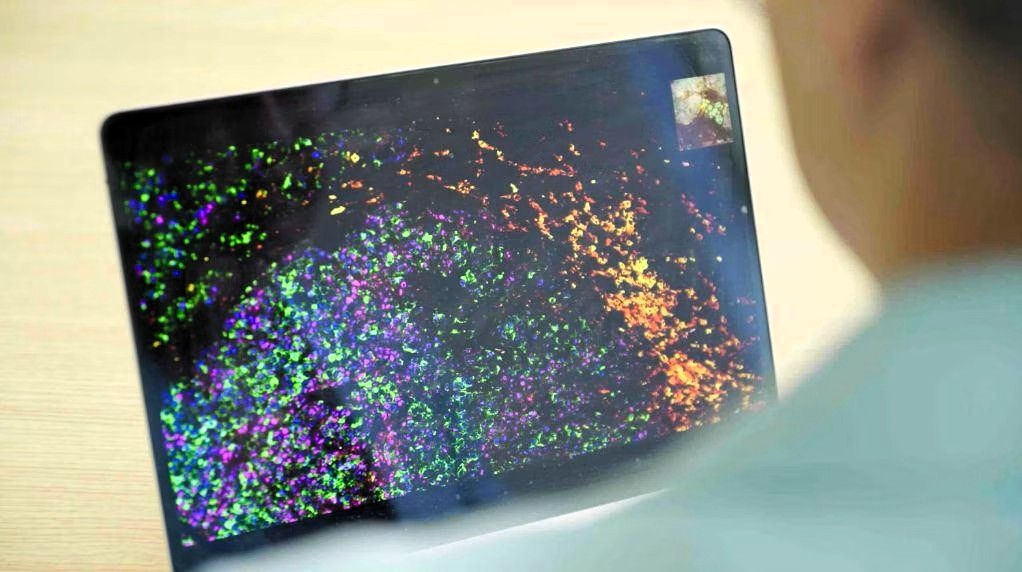
The system flagged signs that invasive lobular carcinoma, which accounts for about 15% of U.S. breast cancer diagnoses, may be more responsive to immunotherapy than researchers thought. It has largely been left out of immunotherapy trials.
The Providence Swedish team confirmed the finding in a second patient dataset and validated it in tumor tissue in the lab. They cautioned that the findings don’t prove immunotherapy would work in these patients but suggest the question warrants further study.
The collaboration connects two organizations that trace their origins to the late Microsoft co-founder Paul Allen, who founded Ai2 in 2014 and whose $20 million donation helped establish the research center at Swedish in 2024.