After more than a decade of focusing on low-cost devices, Amazon is taking its tablets upmarket and moving them to Android, setting up a more direct challenge to Apple’s iPad.
The company on Thursday unveiled Amazon Alexa Tablets, a new line of aluminum tablets with full access to the Google Play Store. That’s a break from Amazon’s longstanding Fire tablet line, which runs the company’s own Fire OS and relies on the Amazon Appstore for apps.
It’s the biggest change to Amazon’s tablets since Panos Panay — who previously led the Surface hardware line as part of his larger role at Microsoft — moved over to lead Amazon’s devices business in 2023.
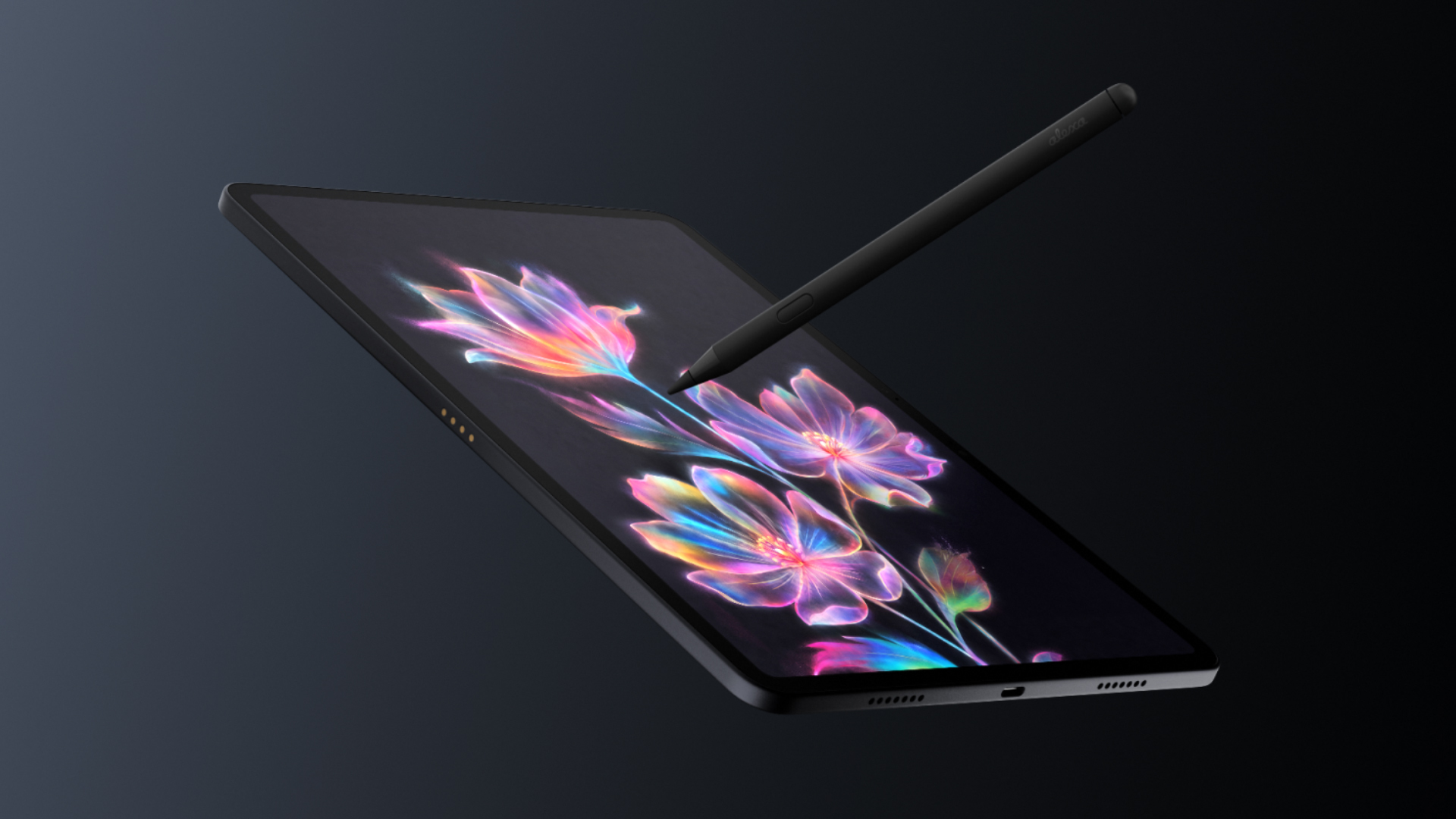
The top model, the Alexa Tablet 12 Pro, pairs a 12-inch display with a pen and a keyboard that snaps on magnetically, a setup that will look familiar to Surface Pro users.
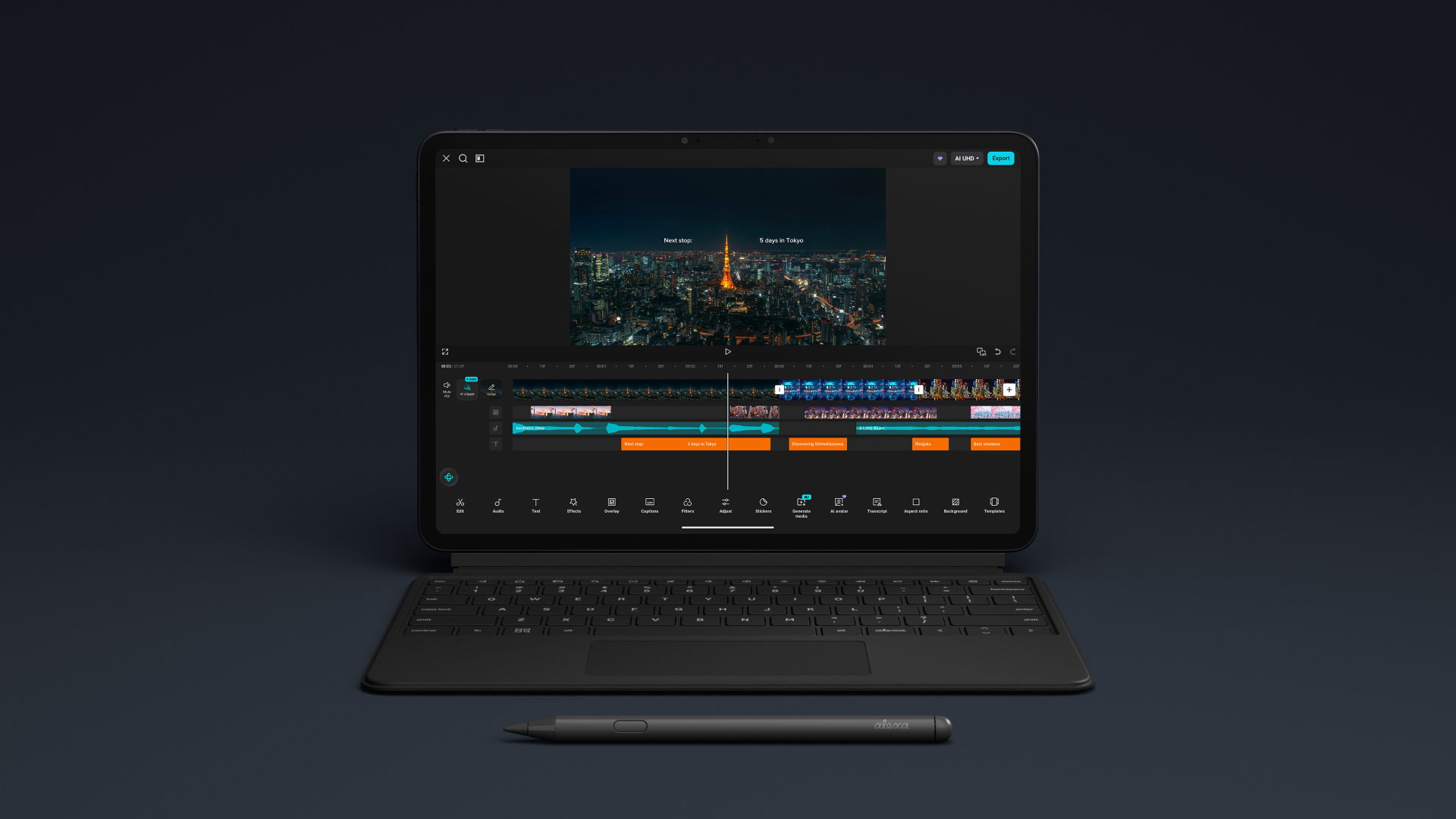
The 12 Pro starts at $499.99, or $549.99 with an anti-glare display Amazon calls Nanomatte. The Pro Keyboard costs $149.99 and the Pro Pen $89.99, so a base Nanomatte model with both accessories comes to nearly $790.
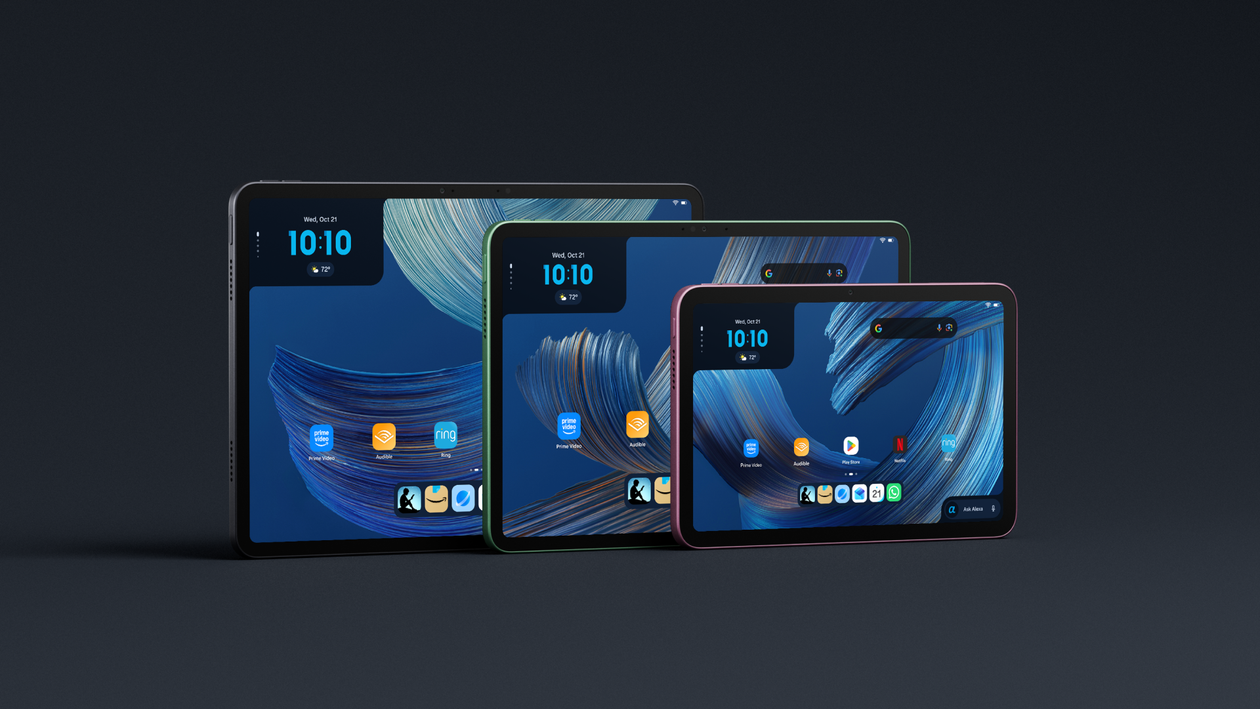
The other two models in the Thursday announcement are the Alexa Tablet 11, which starts at $329.99, and the Alexa Tablet 8, starting at $229.99. All three go on sale Oct. 14 in the U.S., Canada and Mexico. Following Amazon’s traditional naming scheme, the numbers refer to approximate screen size, not version.
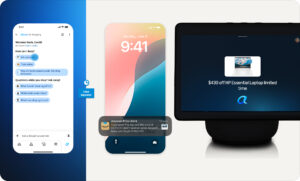
Alexa and Kindle: Alexa+, the company’s generative AI assistant, is built into all three models. A feature called On-Screen Intelligence lets Alexa read what’s on the screen and act on it, such as pulling the dates from a game schedule into a calendar and flagging conflicts.
Live sessions allow a continuous conversation without repeating the wake word, with the option to share the screen as it changes.
Addressing potential privacy concerns, Amazon says the screen-reading features are off by default and require users to opt in, with a visual indicator whenever Alexa can see the screen.
Opening the Kindle app switches the tablets into a reading mode that silences notifications, reduces blue light and extends battery life to as much as 20 hours, according to a blog post by Kevin Keith, an Amazon vice president. Annotations made in books with the Pro Pen sync to Kindle Scribe.
Farewell, Fire: The new tablets don’t carry the Fire name, and Amazon’s announcement doesn’t mention Fire at all. Asked about the future of the line, an Amazon spokesperson said in an email that Fire tablets will keep working and customers will keep access to their apps and content.
“The Alexa Tablets are a new product line built for what’s next — they don’t change anything about the experience Fire tablet owners have today,” the spokesperson said, adding that Amazon will provide at least four years of support “after the last Fire tablet we sell.”
The move tests a strategy that dates back to the original Kindle Fire. Amazon kept its tablet prices low and counted on owners to buy books, videos, music and apps through its own stores.
“We want to make money when people use our devices, not when they buy our devices,” Jeff Bezos, then Amazon’s CEO, said when the company unveiled the Kindle Fire HD in 2012.
With Google Play on board, Amazon gives up some of that control while charging more for the hardware. The new tablets still put Amazon’s own services up front, including Prime Video, Kindle, Audible and Amazon Music, along with a personalized home screen that surfaces Amazon content.
The lineup puts Amazon in more direct competition with Apple, whose iPad leads the higher-end tablet market, and Samsung, the biggest seller of Android tablets. The 12 Pro will also compete with Microsoft’s Surface Pro, the device that set the template for a tablet with a snap-on keyboard and pen.
Inside the devices: All three tablets use MediaTek processors, according to the company — the Dimensity 8400 in the 12 Pro, and the MediaTek 8189 in the 11 and 8. Amazon says the 12 Pro is nearly three times faster at processing and nine times faster at graphics than any tablet it has shipped. It has up to 16GB of RAM, a 120Hz display and up to 16 hours of video playback.
Amazon worked with Corning on the Nanomatte glass, which uses a photolithography process to etch a texture into the glass aligned with the pixels beneath it. Conventional matte screens are sandblasted, which scatters light unevenly.
Amazon is also releasing Amazon Kids Tablets in 8.7-inch and 11-inch sizes, bundled with a kid-proof case and a year of Amazon Kids+, its subscription service for children’s books, videos and games.
The tablets go on sale Oct. 19 in the U.K., Germany, France, Italy and Spain, and will also be sold at Best Buy and Target.