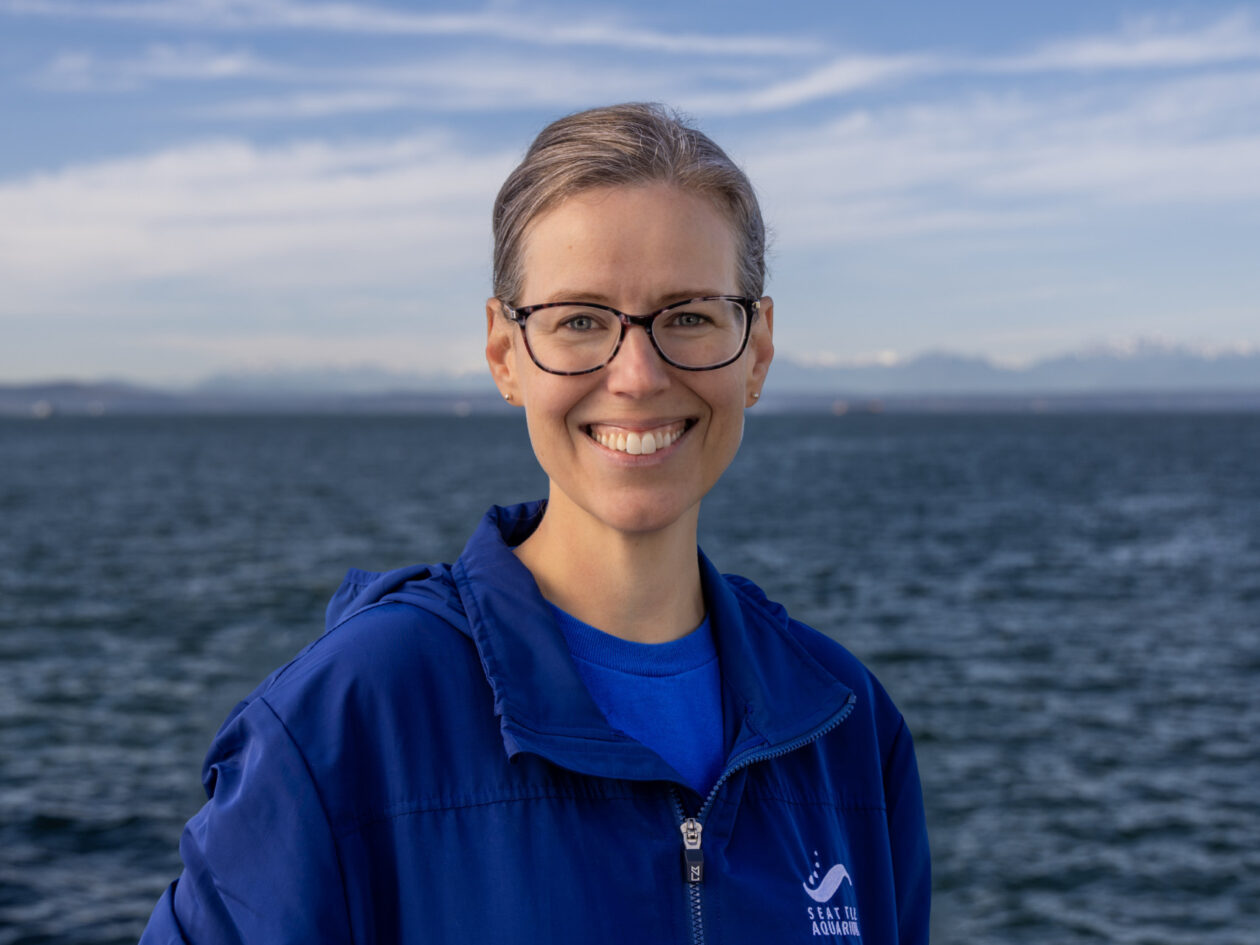
At first glance, Meg McCann would not be the obvious choice to run the Seattle Aquarium, one of the city’s top attractions, drawing 1 million annual visitors to the waterfront and supporting critical research in marine conservation.
McCann, a trial lawyer by training, has overseen an organization serving survivors of sex trafficking and held leadership roles with the Washington State Department of Licensing and the state’s Office of the Attorney General. But her love of the ocean, rooted in a childhood in Rhode Island, and her drive to foster systemic change brought her to the aquarium.
“Everything I’ve ever done has been supporting great outcomes for individuals, but at the end of the day, the best outcome for all of us is going to be a healthy planet,” said McCann, who took the role of president and CEO in January.
With the aquarium connecting with visitors from around the world, and based in a city and community that values the environment and embraces innovation, she envisions the institution as a global leader in conservation.
Keep reading to learn more about McCann’s sustainability journey. Her quotes have been edited for clarity and length.
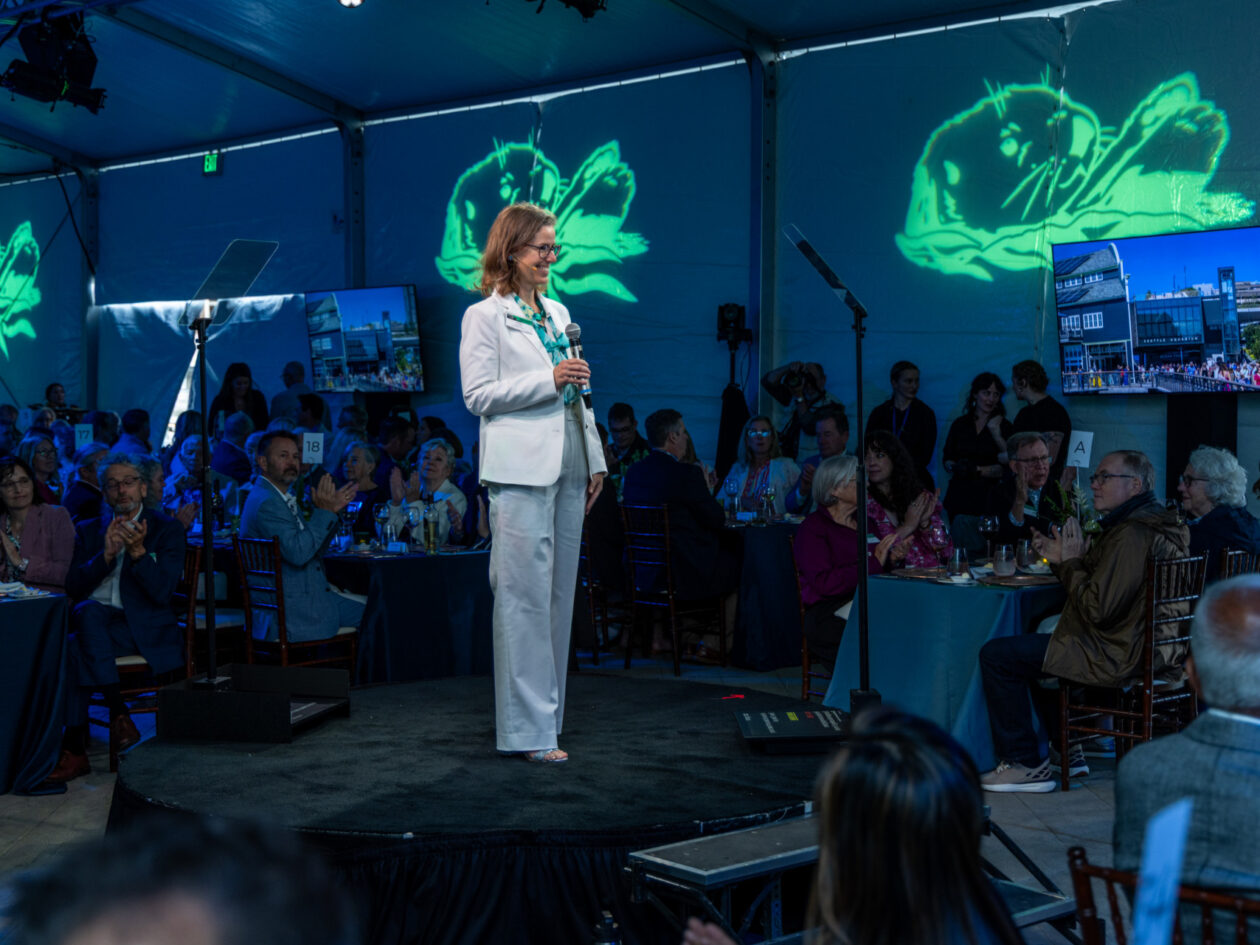
What was the moment you realized you had to work in sustainability?
I grew up in Rhode Island along the ocean, because that’s the only place you can be if you’re in Rhode Island — it’s so tiny. We had to do a class project with a friend, a news report on the state of the bay. So my friend and I went down to the bay with her mom’s camcorder, and we were picking up McDonald’s Styrofoam off the beach and saying, “This is going to be around for the next 75 to 100 years,” preaching to our class.
And it was right around the time that the fisheries in Rhode Island started to close because the water no longer could sustain healthy shellfish. It was one of those moments where it was this direct connection between our own personal habits and the way we’re interacting with the world and the broader impact it can have.
What gives you the most hope for the planet?
There are two things. One is the kids who come through our aquarium. They’re just so joyful and excited and empathetic and infinitely creative. The next big innovation or solution is going to come from this group of people, and we are relying on them to come up with that big innovative solution that’s going to help protect the Earth.
The other thing that gives me hope is the scientists and partners we have at the aquarium. We’ve had the opportunity to participate in species recovery work here in the Salish Sea — to really help figure out where kelp is most likely to grow, and that’s important to the overall ecology — to participate in the recovery of pinto abalone, which is a sea snail that’s critical to the environment.
We are surrounded by really smart scientists who are using different types of technology, new cutting-edge tools and techniques to regenerate the ocean. It’s not a lost cause. There is hope as long as we’re curious and we’re tenacious.
If you could invent one sustainability solution overnight, what would that be?
If there was a way to remove microplastics from our water, that’s what it would be. The way that plastic is being dumped into the ocean and breaking down — you can’t see it because it’s so small. But it’s settling deep into our ocean, at all levels of the ocean. Animals are ingesting plastic and it’s causing all sorts of ecological disruption. And that doesn’t even account for the animals that we’re ingesting as part of the food system. It is changing the chemistry of our water.
What have you changed personally to address environmental concerns?
Since coming to the aquarium, I have learned so much about sustainability and the way you operate an organization. What I’ve been really thinking about when I make a big decision is trying to understand the downstream impacts. One example: We are trying to use less natural gas and remove ourselves from fossil fuel dependency. When we think about how we want to grow our business and how we want to renovate Pier 59 and 60, we’re really thinking about how do we electrify our systems and how do we find alternative fuel sources to support that electricity.
What is an underrated solution that deserves more attention?
It’s building a broad coalition. For example, we have a zero-waste goal at the aquarium as part of our operation. By 2030, we want to divert 90% of our waste out of landfills, and the only way you can divert that much waste is if you enlist the help of everybody — the whole team, and it’s not just the team, but it’s also the million-plus guests who come through our doors.
The other thing along that vein is the Seattle Aquarium is slightly unique because we serve people from all around the world, we’re right next to a cruise ship stop, and we’re a global city with global visitors, and we have people from all over the country. Seattle can be a bit of a bubble of progressive values, and so I forget that other people might not share my same sustainability and conservation values. One thing we’re really paying attention to is how do we invite people in who don’t agree with us? How do we make them feel welcome, and how do we make them feel like they have a sense of agency and ownership?
What’s one metric you watch obsessively as a sustainability leader?
Our energy usage. We are constantly looking for ways to make our systems far more energy efficient. If our energy usage goes down, so does the cost of running the aquarium, which means more money for things like animal health, educational programming, outreach, etc.
The other thing we obsessively watch is our goal around participation in our sustainability engagement survey. Our goal is 90% participation, which means 90% of our staff say they know what the sustainability plan is, they know what the goals are, and they have metrics that tie into those goals. So if you’re the custodial team, if you’re on the guest services team, if you’re on the AV team, you know what that means for you, and our own performance is evaluated based on that.
The scope of climate change is daunting, so how do you approach it?
Recently we’ve been putting cameras on our Pier 59 in downtown Seattle as part of our research. Humpback whales have passed by that didn’t come to the surface, so we only know they came by because we have cameras and sonar and hydrophones. We caught a red octopus trying to steal bait from one of our research stations. We have sixgill sharks passing by. To see what’s happening right under our feet is super inspiring.
The big picture is hard, but there’s the daily reminder of what’s at stake and why it’s important — and the fact that our interventions do work, we just need a lot more of them, a lot more energy behind them. There is a solution, and getting to see that life in action right under our feet is so wild, and it never ceases to amaze me.