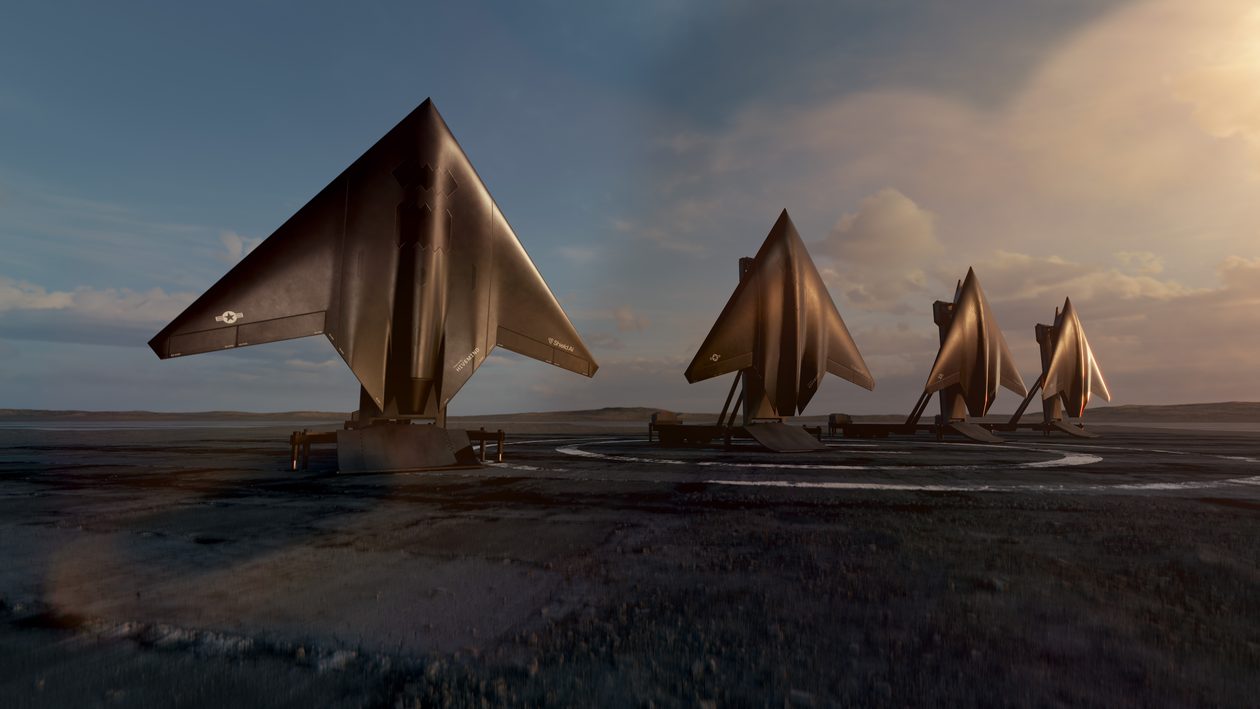
Traditional military air operations rely heavily on fixed, vulnerable targets: long concrete runways and aircraft carriers.
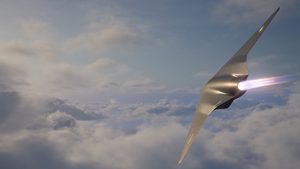
Shield AI’s new X-BAT autonomous fighter jet is designed to bypass that infrastructure entirely, utilizing a vertical takeoff mechanism and a mobile launch trailer that can operate from highways, remote outposts or standard cargo ships.
Operated without a human in the cockpit, the aircraft relies on aboard algorithms to navigate and execute strike missions where GPS and satellite communications are jammed. The X-BAT has yet to make its maiden flight, but Shield AI and GE Aerospace cleared a critical milestone this summer by completing ground engine tests and integrating the jet’s F110 thrust-vectoring nozzle.
With news that the X-BAT will be mass produced in the Seattle area — bringing 4,000 jobs to the region by the early 2030s — we decided to take a closer look at this groundbreaking aircraft.
Meet the X-BAT: Specifications & Capabilities
- Aircraft Name: X-BAT
- Developer: Shield AI
- Aircraft Classification: Autonomous / AI-Piloted Strike Fighter (Runway-Independent)
- Fuselage Length: 26 feet
- Wingspan: 39 feet
- Service Ceiling: Greater than 50,000 feet
- Takeoff/Landing Style: Vertical Takeoff and Landing (VTOL)
- Objective Combat Radius: About 1,000 nautical mile combat radius (out and back), topping the roughly 590 nautical miles of the Air Force’s F-35A.
- Total Range: 2,000 nautical miles.
- Internal Payload Bay Capacity: Up to 2,000-pound class weapons.
- Engine: GE Aerospace F110
- Software: Shield AI Hivemind autonomy system.
- Primary Propulsion & Flight Control: Autonomous AI agent, replacing human onboard pilot.
- Logistics & Mobility: Road-transportable via dedicated Launch and Recovery Vehicle (LRV) trailer; highway-mobile and ship-deployable (destroyers, LHA/LHD amphibious assault ships, expeditionary bases). Tagline: “Earth is our runway.”
- Target Production Rate: ~150 aircraft per year by early 2030s
- Key Operational Milestones: First vertical flights expected in 2026. Production is set to start in Des Moines in mid-2027. The first jet is projected to be built in early 2028 and fly by that summer. The Navy could start using it by the end of 2029. Full production is planned for the early 2030s.