
In less than four months, Microsoft has added roughly half an Amazon to its market value.
The tech giant’s stock has gained about $1.4 trillion in value since early summer, rising from $352.83 on June 25, its lowest close in more than a year, to a record close of $543.45 on Tuesday, giving it a market value just above $4 trillion. The increase over that period is nearly as much as Tesla is worth.
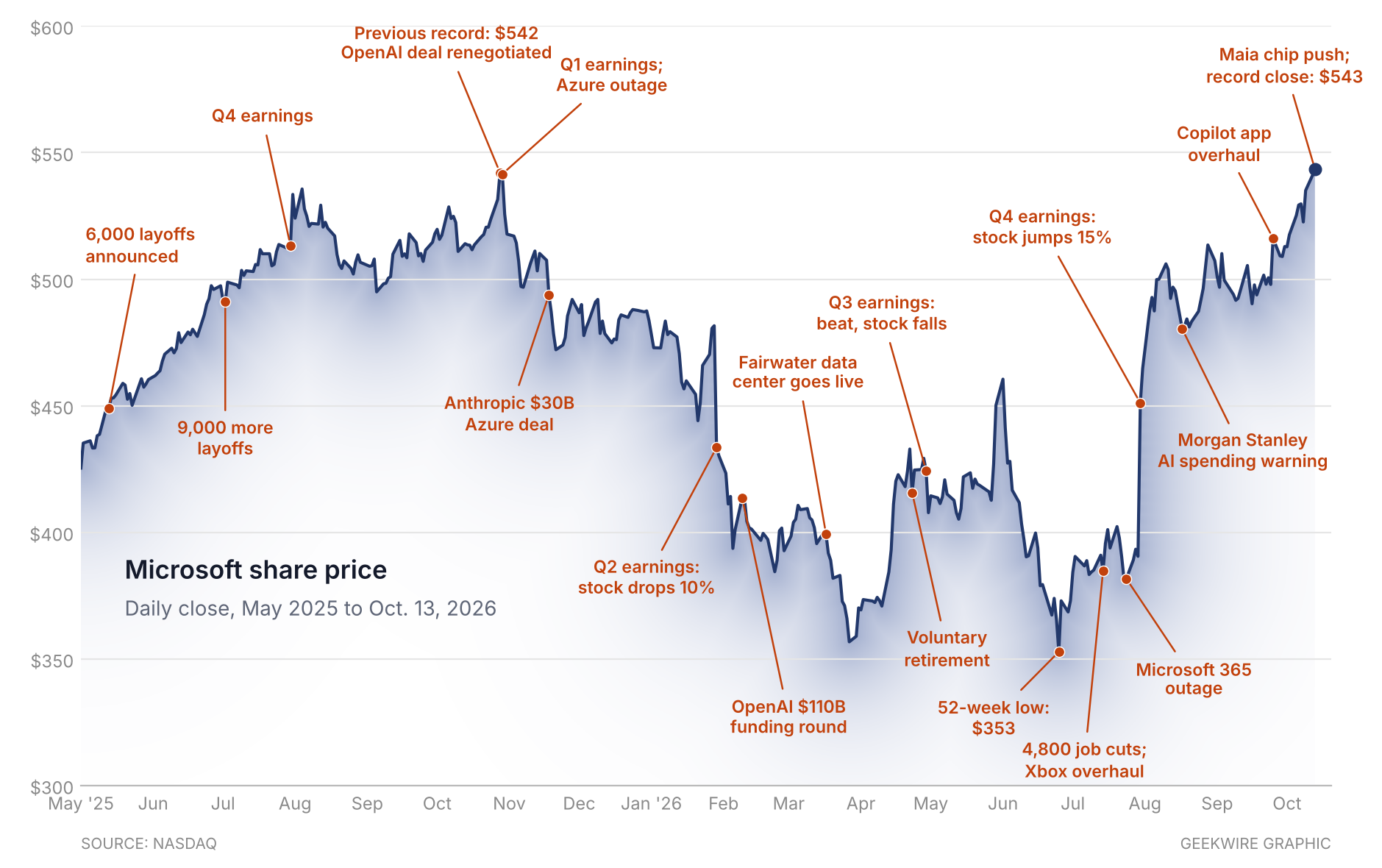
As stock turnarounds go, it’s extraordinary. In January, Microsoft lost $357 billion in a single day, the biggest one-day drop in its history, as investors worried about the company’s AI spending and its reliance on OpenAI. By midsummer, Microsoft was the worst performer this year among the big tech stocks known as the “Magnificent Seven,” according to Morningstar.
The rebound accelerated in late July, when Microsoft reported that Azure, its cloud platform, grew 43% and topped $100 billion in annual revenue. The stock jumped 15.5% the next day. It has mostly kept climbing since, as Microsoft rolled out a revamped Copilot app, a new AI push for Windows and new AI chips.
Microsoft isn’t rising alone. The broader stock market has also been hitting record highs, led by AI stocks. The S&P 500 closed above 7,800 for the first time last week, even as the benchmark 10-year Treasury yield reached its highest level since 2002.
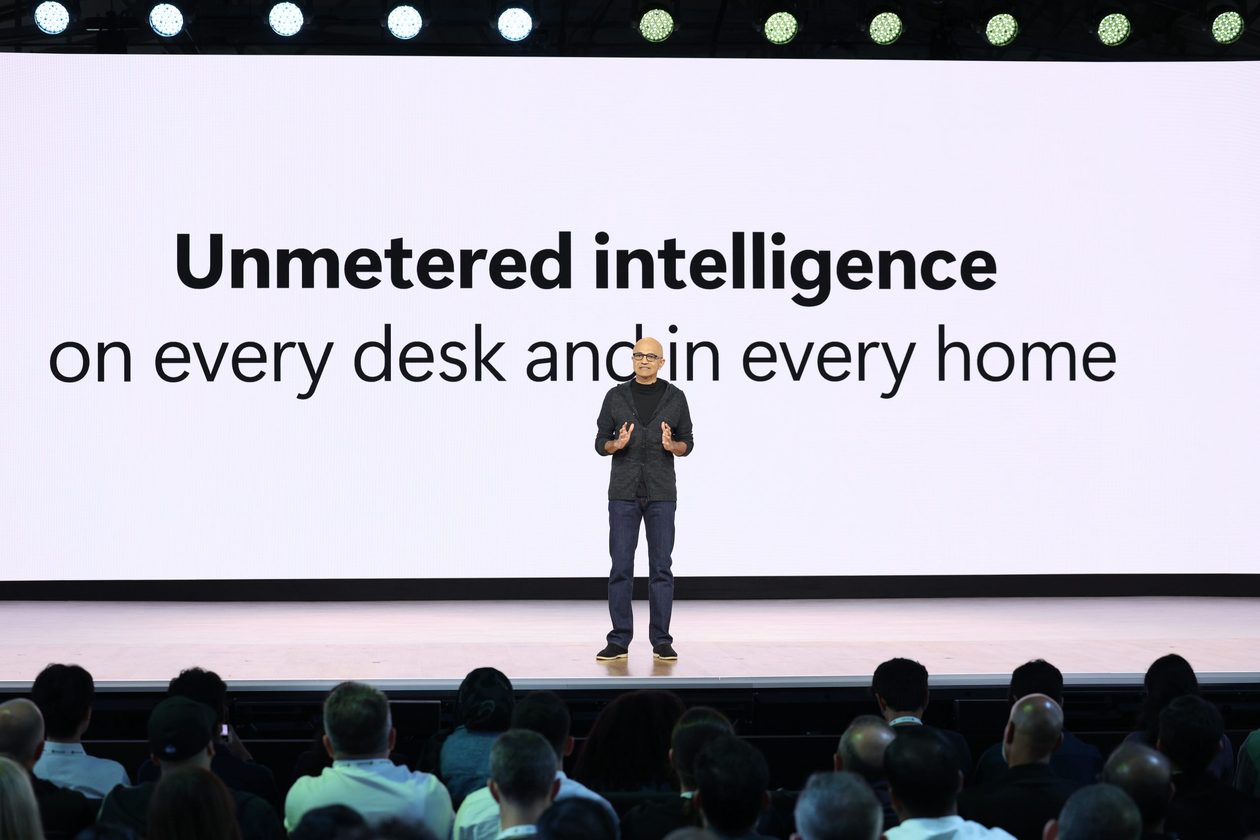
Microsoft CEO Satya Nadella has been making a broader pitch along the way. In an essay posted on X in July, he warned that companies relying on outside AI labs “pay for intelligence twice, once with money, and again with something even more valuable,” meaning their own knowledge.
He urged businesses to keep control of that knowledge and avoid tying themselves to any one AI model. Microsoft sells access to models from OpenAI, Anthropic and others, along with its own.
Last weekend, he took up a related theme, calling on X for an “emergency brake” on advanced AI models. That means “separating the model from the harness that orchestrates its work,” he wrote. “We must assume a model is compromised and contain it from the start.”
The message also fits Microsoft’s business interests. As companies use AI models from multiple providers, the advantage could shift to companies like Microsoft that run the cloud and workplace software where businesses keep their data.
Microsoft reports its next quarterly results Oct. 28.