Tukwila, Wash.-based Starfish Space is ready for the first launch of its full-size Otter space servicing vehicle, following two orbital tests of scaled-down prototypes.
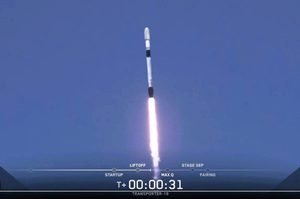
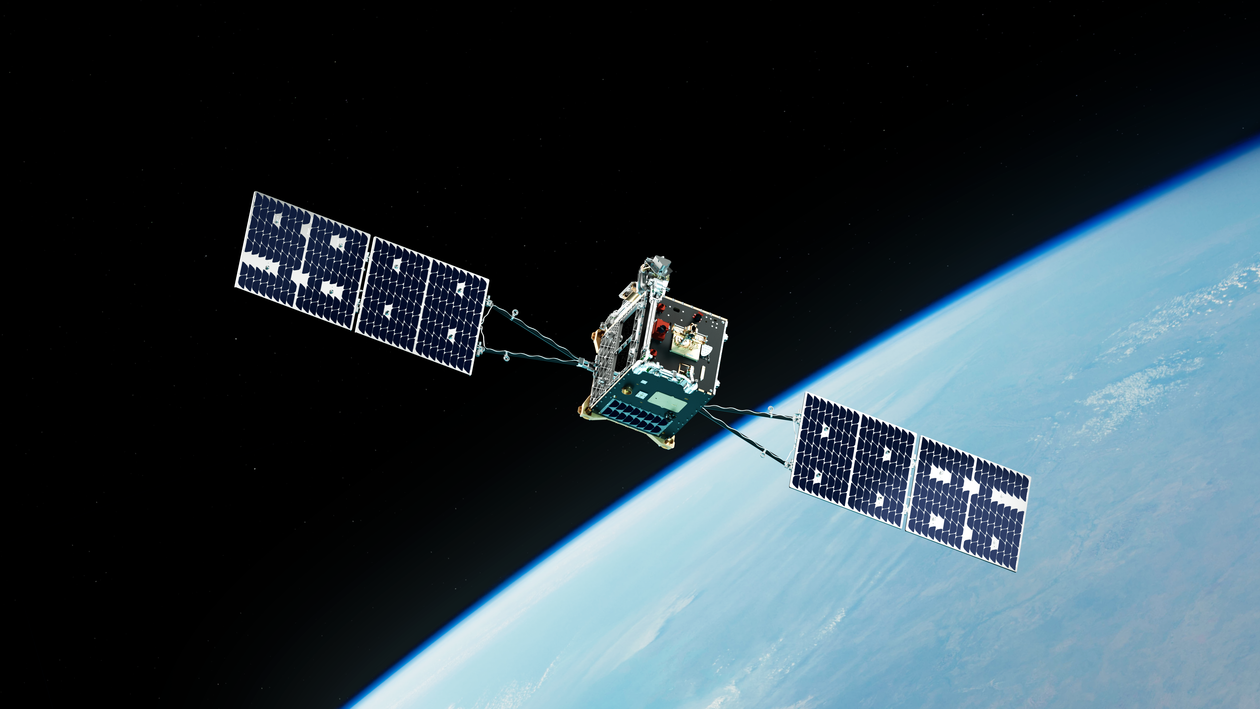
Otter is due to lift off from California’s Vandenberg Space Force Base no earlier than Oct. 1, riding into orbit alongside other payloads on SpaceX’s Transporter-18 satellite rideshare mission. The 660-pound (300-kilogram) spacecraft, roughly the size of a kitchen oven (plus solar arrays), will demonstrate technologies for inspecting inoperable satellites during NASA’s $15 million Small Spacecraft Propulsion and Inspection Capability mission (SSPICY).
“This is the moment Otter becomes real,” Starfish co-founder Austin Link said today in a news release. “It’s no longer something we’re designing for the future. The first Otter is built, it has a customer and a mission, and it’s going to space.”

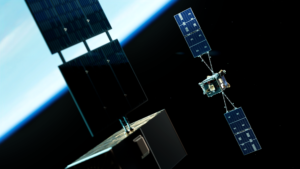
After it separates from its SpaceX Falcon 9 rocket and undergoes commissioning, the spacecraft will maneuver to approach and observe multiple satellites up close.
“We have a series of candidates that we can go to,” Starfish’s other co-founder, Trevor Bennett, told GeekWire. “We’ve actually studied a number of these satellites as potential candidates, and those will be selected once we’re in orbit. … These are spacecraft that are in family with satellites that NASA would be interested in servicing, and by being decommissioned satellites, there is no concern about trying to maintain the operational mission while we do our mission.”
Insights gained during the SSPICY mission will be applied to future missions that would involve docking with other satellites. Otter is built to service satellites for extended operations, or to dispose of them if they’re no longer operable.
“Success in the mission is to actually go and provide this commercial inspection service on a number of these different spacecraft, and that will be a huge win in and of itself,” Bennett said. “But we’re also bringing Otter along to provide servicing well beyond that, so we could go and inspect more spacecraft, or potentially do some additional docking past the initial mission.”
Bennett said the satellites on the list range in size from hundreds of kilograms to multiple tons.
“What’s really interesting about some of these spacecraft is that they have not been seen in a long time,” he said. “And so there is not only value in doing the commercial mission that we set out to do, but we provide some of that data back to NASA and say, ‘This is how your spacecraft have held up over the years in orbit’ — which is an interesting learning for them as well.”
How long will the SSPICY mission last? Bennett said that’s an open question. “Depending on how long each inspection takes, and how long the transit is to subsequent spacecraft, it’s probably a couple of years that we would be operating around multiple clients with this mission,” he said. “There’s always an opportunity for an extended mission here.”
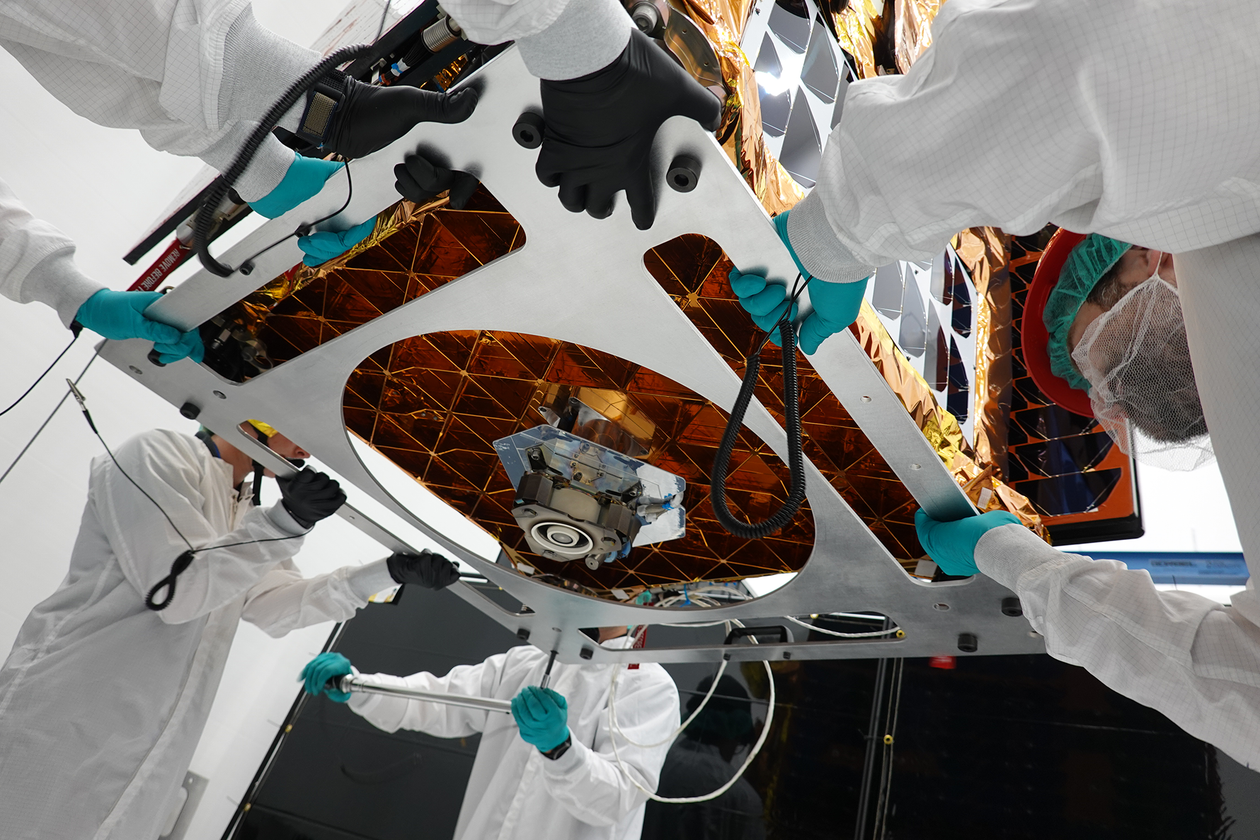
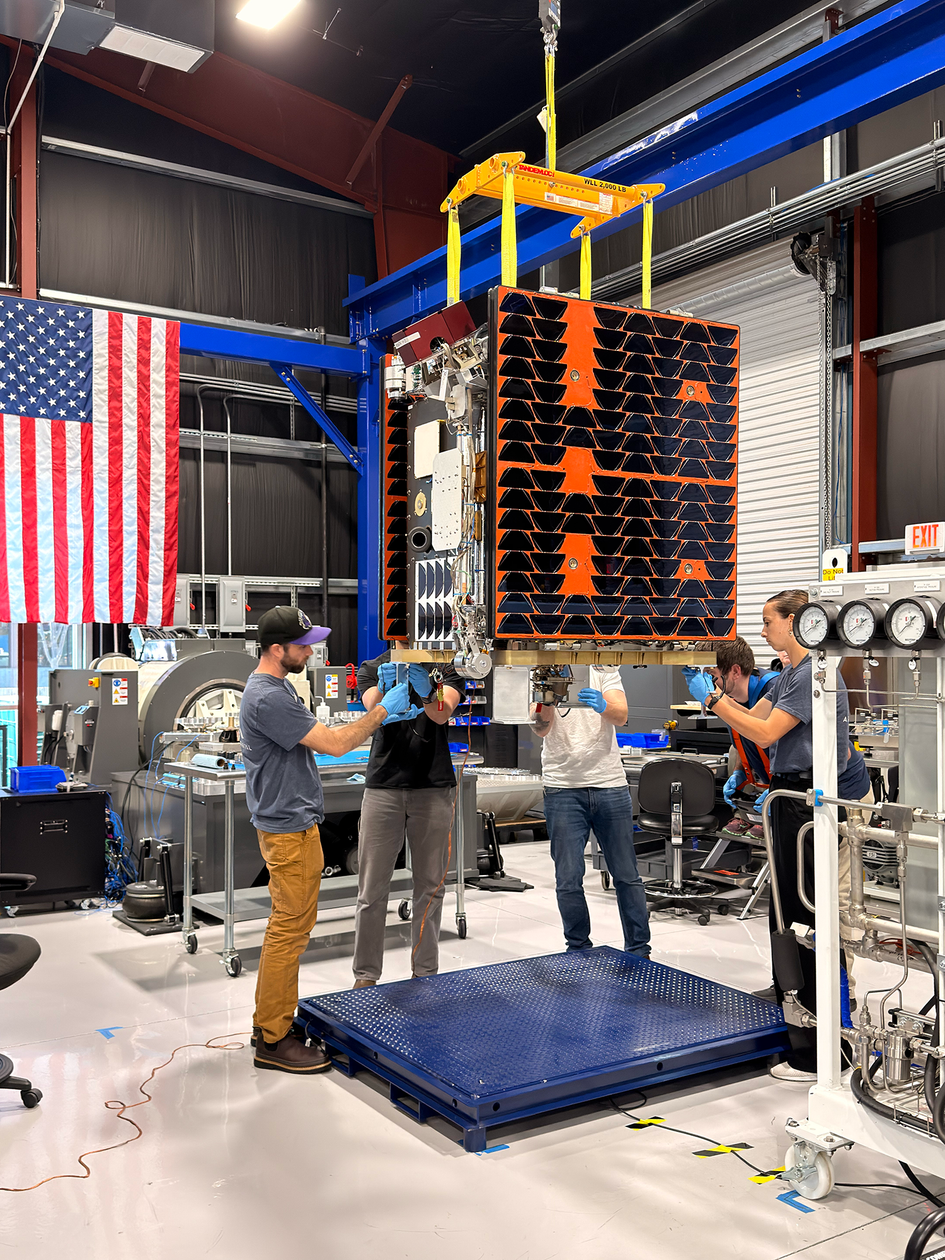
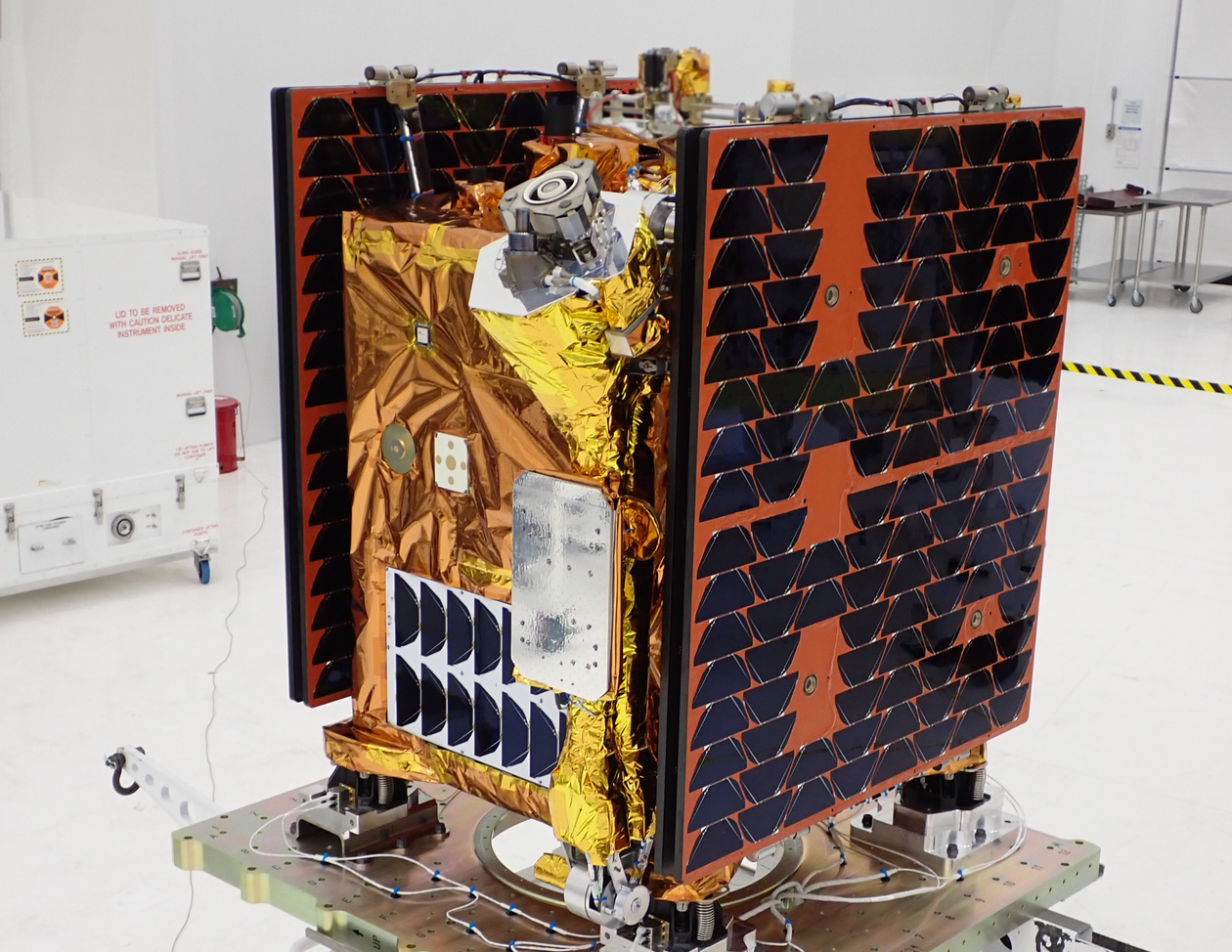
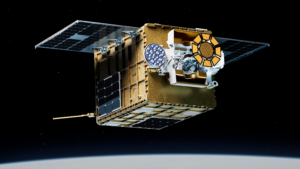
This won’t be the first Starfish spacecraft to go into orbit. The startup, which Bennett and Link founded in 2019 after working at Jeff Bezos’ Blue Origin space venture, launched an Otter Pup prototype that was about the size of a microwave oven in 2023. Although technical difficulties prevented the spacecraft from docking with its target satellite, it successfully demonstrated Starfish’s satellite-tracking system.
A second Otter Pup was launched last year and is currently closing in on a different target satellite. “We have been in the vicinity with it since about June, and we’re consistently flying quite close to that spacecraft with the intention of Otter Pup 2 actually being a docking mission,” Bennett said.
Starfish Space is already preparing for missions beyond SSPICY — including a satellite disposal mission for the Pentagon’s Space Development Agency, two commercial satellite servicing missions in geostationary Earth orbit, and two servicing missions for the U.S. Space Force.
That means Starfish is working on at least six Otters, including the unit due for launch in October. “Now it’s all about how many Otters can we build, and how quickly can we get them up there for folks, because the demand is there,” Bennett said.
He said it currently takes about a year and a half for each Otter to go through the entire manufacturing process. “Part of our goal is to speed that process up and build toward a fleet strategy,” Bennett said.
Expanding the workforce is central to that goal. Just a few months ago, Starfish Space reported having more than 90 employees. “We’ve grown to over 120 people now, which is pretty large for where we have been over time, but it’s still a really focused team,” Bennett said.
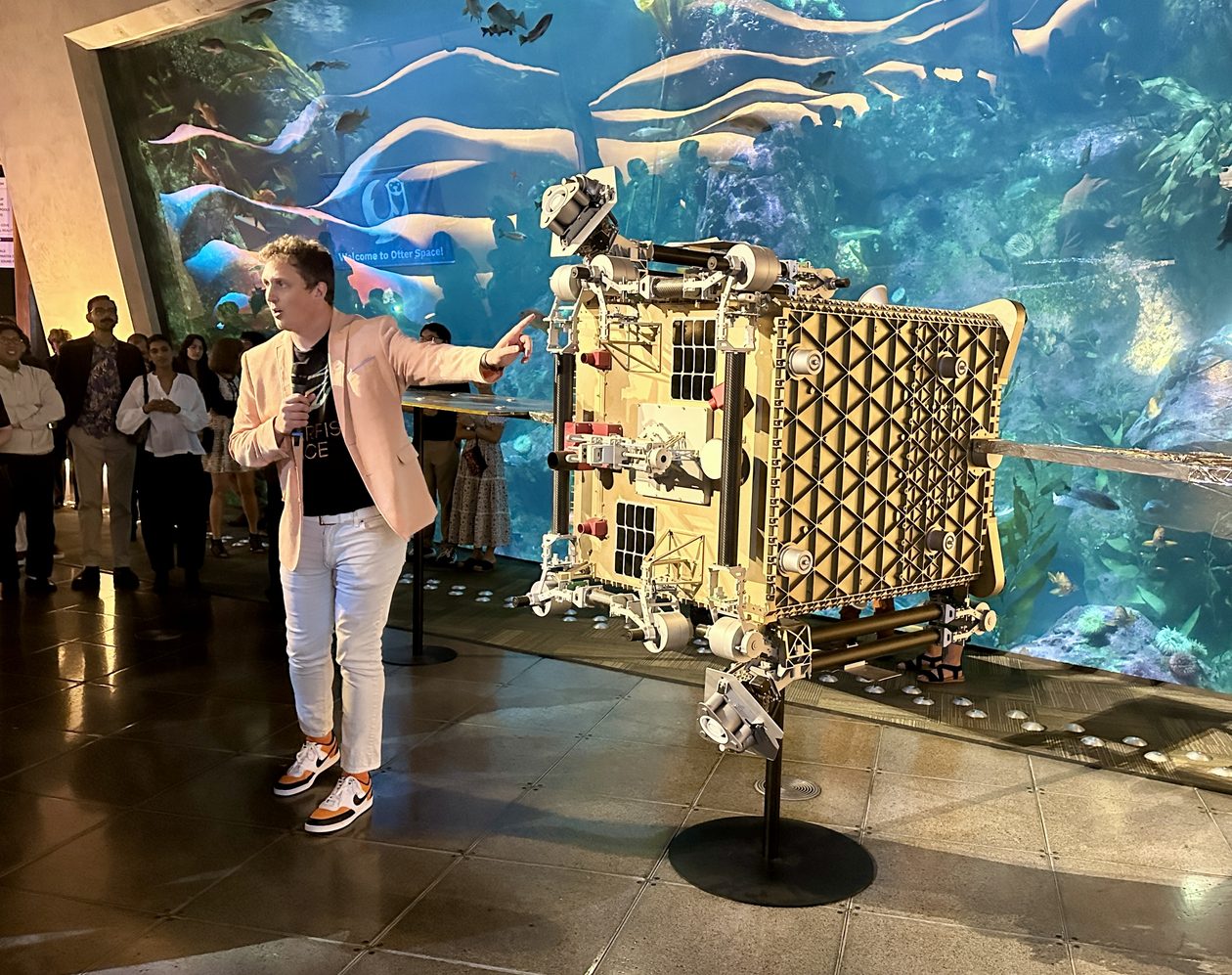
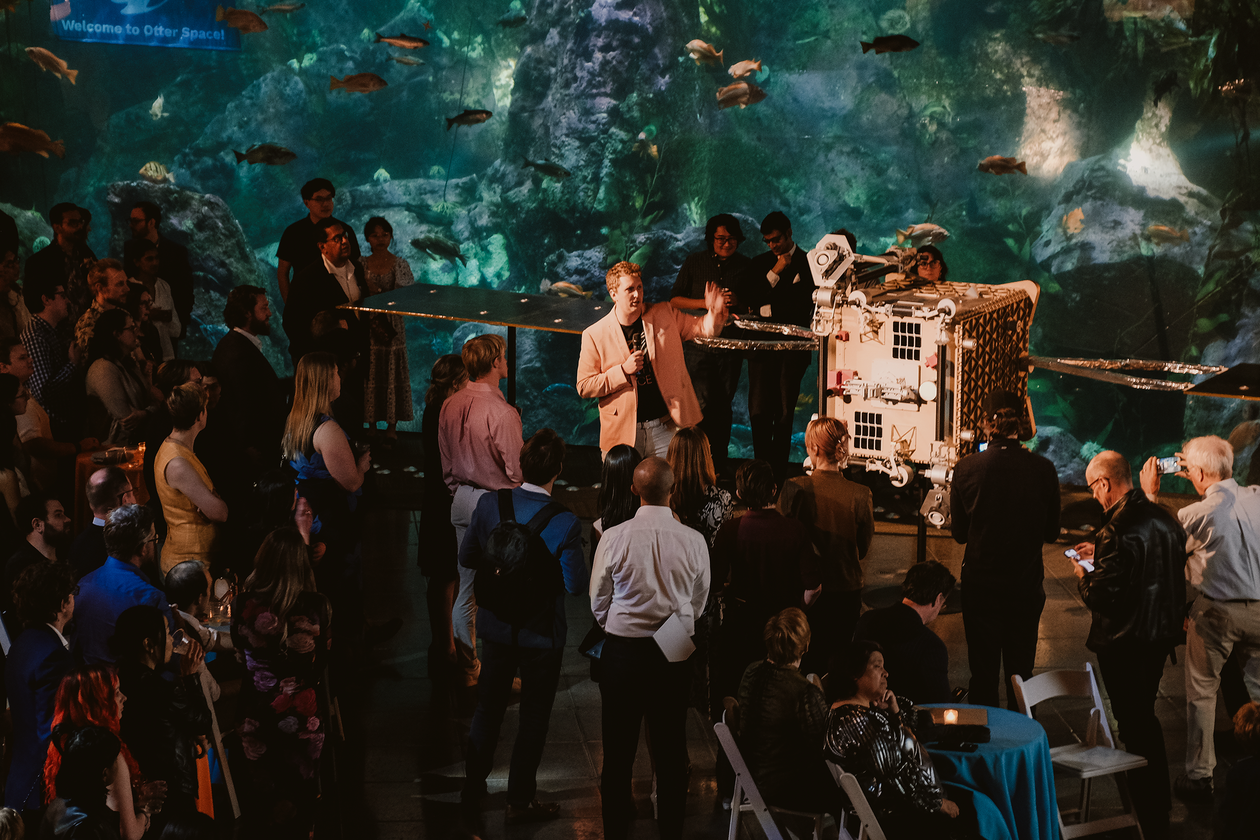
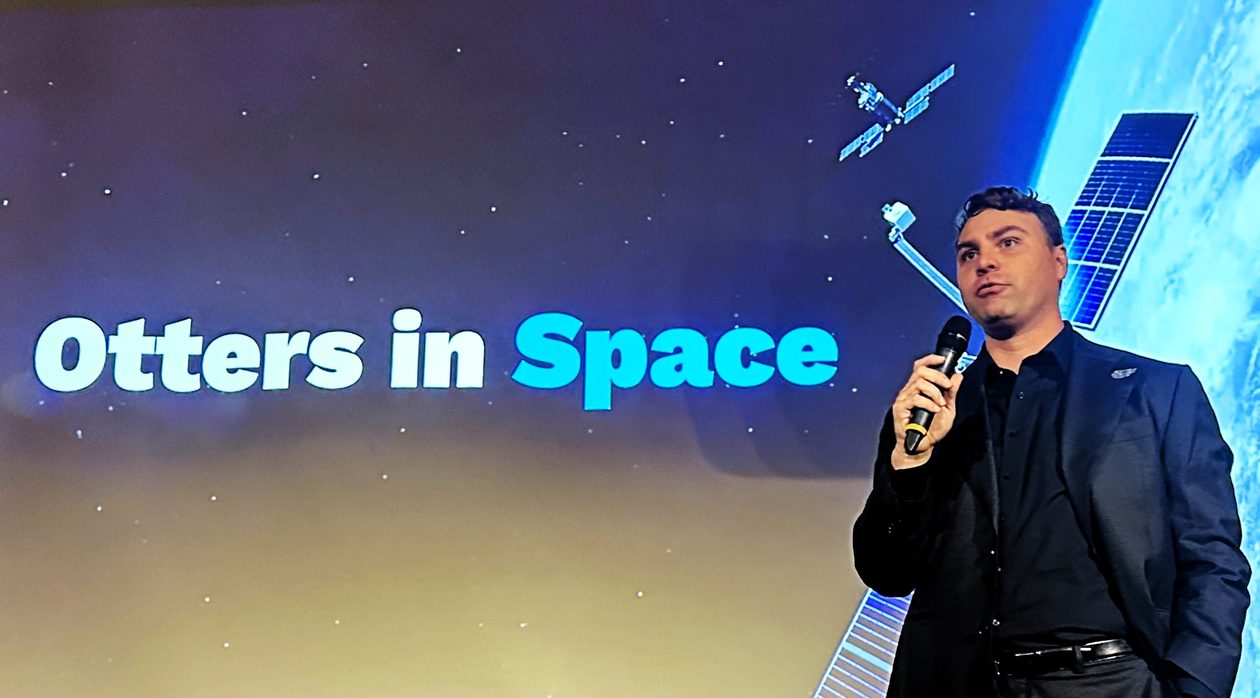
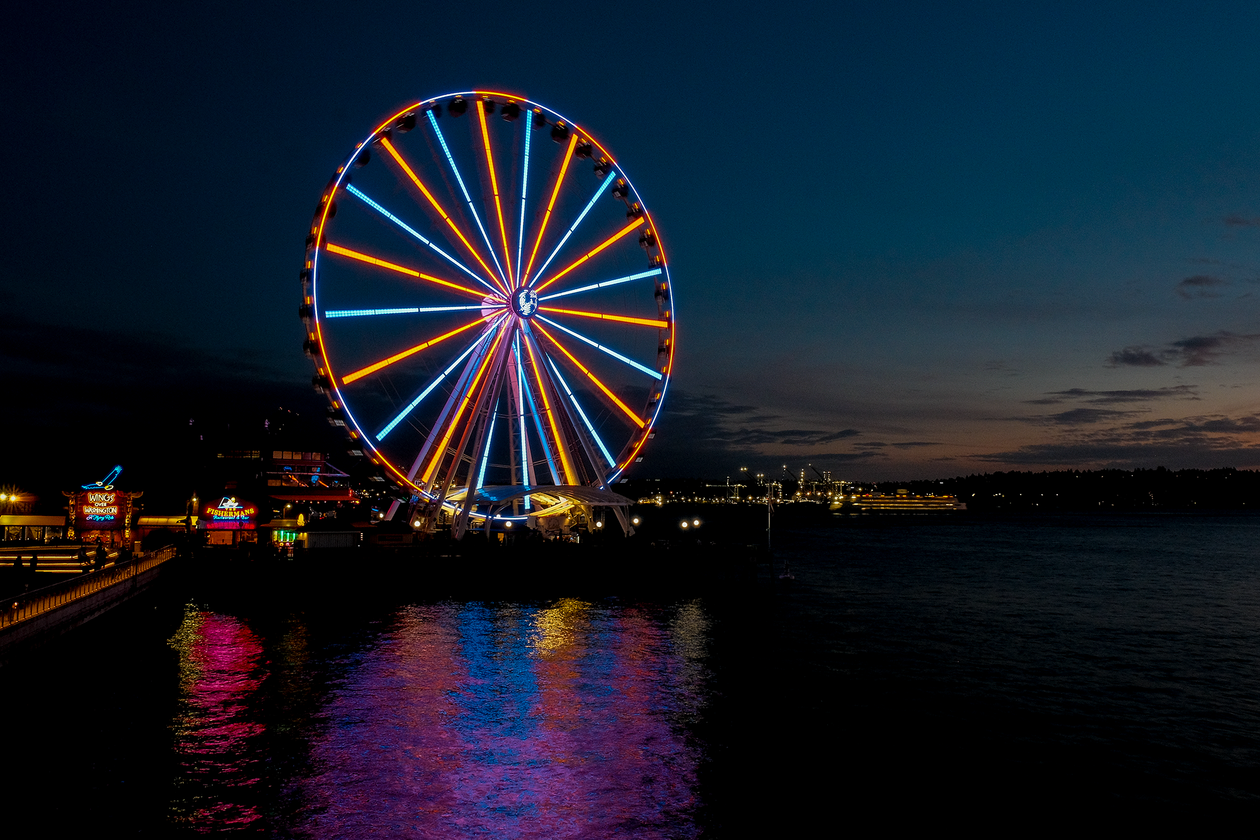
To celebrate Otter’s upcoming debut, Starfish Space put on a party for its employees and for invited guests at the Seattle Aquarium on Wednesday night. The spacecraft itself couldn’t be there, because it’s already in California awaiting launch. But an Otter mockup was on display at the party — and nearby, the Seattle Great Wheel was illuminated in Starfish’s corporate shades of coral and azure.
“This is a big deal for Seattle,” Bennett said. “Anytime a Seattle space company is able to make a meaningful difference in the larger space ecosystem, that’s worth celebrating. If we can splash other companies’ colors on there when they have their great moments, why not make that a tradition going forward? We’re happy to be the first, and hopefully not the last, that gets to splash colors on a Ferris wheel and show off what the Seattle space community has to offer.”
Check out these snapshots from Wednesday night’s celebration: